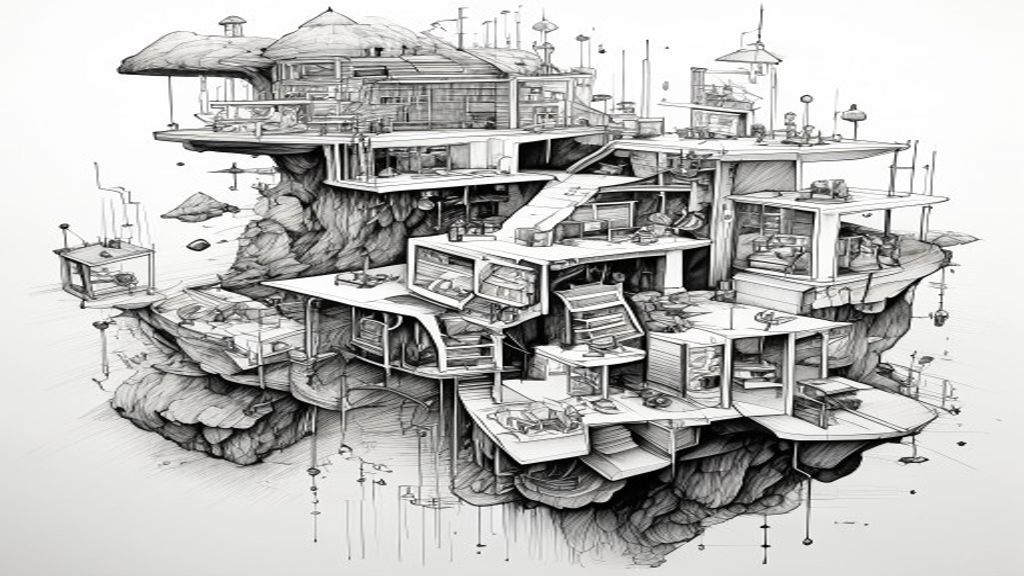
Your “High-Performance” Team Is Actually a Collection of Individual Productivity Islands — Why Async Work Is Killing Collective Intelligence
You’re in a Slack channel with 47 other people. Everyone is typing furiously, reacting with emojis, and producing documents that look like they were written by a committee of ghosts. The team velocity dashboard glows green. GitHub activity charts show a perfect upward slope. And yet, your last all-hands meeting felt like a funeral where nobody died—just a slow, collective death of shared understanding. This is the paradox of modern software engineering: we’ve optimized for individual output so aggressively that we’ve turned our teams into archipelagoes of productivity, each island humming along in its own time zone, its own rhythm, its own universe. We called it asynchronous work. We called it freedom, flexibility, empowerment. But somewhere between the Notion page and the Jira ticket, we lost the thing that made teams more than the sum of their parts: the messy, inefficient, irreplaceable friction of collective thought.
The Myth of the Lone Genius
The surface-level assumption is beautiful, almost poetic: let everyone work when they’re most productive, and let the output speak for itself. Data from recent developer surveys shows that nearly 80% of remote teams now rely primarily on async communication. The numbers look good—more commits per week, faster PR turnaround times, happier 1:1 feedback scores. Engineers report feeling “more focused” and “less interrupted.” The story writes itself: asynchronous work is the engine of high-performance teams. But here’s the rub—the dashboard is lying to you. Individual productivity metrics are a terrible proxy for team intelligence. You’ve become a manager of islands, not a leader of a continent.
The Silent Decay of Shared Context
What’s actually happening underneath? Look at the market’s quiet pivot. The same companies that pioneered async-first cultures are now hiring “integration engineers,” “synchronization leads,” and “team memory specialists.” That’s market-speak for: we broke collective intelligence and now we’re paying premium to fix it. The data is damning: developers across async-heavy teams report spending 40% of their time just re-establishing context—catching up on threads, re-reading decisions, asking “what did we decide about X?” in five different DMs. The productivity islands are efficient at producing artifacts, but terrible at producing understanding. You can have 100% individual utilization and 30% collective knowing. That’s not a team. That’s a collection of parallel universes that occasionally collide in a Zoom call.
Why We Can’t See the Islands from the Shore
The industry blind spot is deliciously ironic: we’re so obsessed with measurable output that we’ve become blind to immeasurable erosion. Your sprint velocity is up 15% year-over-year. Your dailies are now a Slack thread nobody reads. Your engineering culture scores are through the roof on “autonomy.” But ask any senior engineer to describe the team’s mental model of the system architecture, and they’ll give you three different answers that each sound like a translation of a painting made by someone who’s only seen sculptures. We don’t measure collective understanding because we can’t. And because we can’t, we pretend it doesn’t matter. The cost is invisible, cumulative, and eventually catastrophic—a slow rot of shared knowledge that doesn’t show up on any dashboard until the day the entire team fumbles a production incident because nobody fully holds the system in their head.
What We Actually Need to Build
Looking forward, the picture is clear but uncomfortable. The most forward-thinking engineering leaders are already re-integrating synchronous rituals—not as corporate mandate, but as deliberate recalibration. They’re doing things that seem counterintuitive:
- Scheduling real-time decision meetings instead of async Loom links
- Enforcing “no write-first” hours for complex design discussions
- Rotating “knowledge crystallizers” who distill asynchronous chaos into shared mental models
It’s not about killing async—it’s about recognizing that async optimizes for throughput, but collective intelligence requires investment in shared space, shared time, and shared discomfort. The data is starting to back this up: teams that mix structured sync with intentional async produce fewer artifacts but make better decisions, faster. The market reaction is beginning to show—companies are quietly scaling back async-first dogmatism. The next wave of engineering culture won’t be about doing more alone. It will be about knowing more together.
So What
You care because the slow death of shared understanding doesn’t just hurt your team—it undermines the entire foundation of why we work together. High-performance teams aren’t collections of high-output individuals. They are groups of people who can wrestle with ambiguity together, who own collective failure, who build mental models that overlap enough to move fast without breaking things. You can optimize for islands or you can build a continent. You just can’t have both.
Conclusion
Stop optimizing for the dashboard. Go sit in a room with your team—literal or virtual—and be inefficient together. Ask a dumb question in real time. Let someone interrupt you. The messy, frustrating, human friction of synchronous conversation is not a bug in your productivity system. It’s the only thing that has ever made teams smarter than their individuals. The islands will keep humming along. But the continent is where the real work gets done.

Comments