2026’s Observability Data Proves Your Monitoring Stack Is a $200k Noise Machine—Why Engineers Who Ditch Dashboards for Causal Debugging Ship 3x Faster
Your pager goes off at 3 a.m. again. You stumble to your laptop, pull up the dashboard you rebuilt last quarter, and stare at a rainbow of line charts. Everything is red. Or yellow. Or pulsing with the kind of urgency that makes you suspect your monitoring stack is having its own existential crisis. You spend the next forty-five minutes clicking through traces, logs, and metrics, only to discover the root cause was a single misconfigured environment variable. Sound familiar? Here’s the contradiction: we’ve built the most elaborate observability systems in history, yet engineers now spend more time managing alerts than fixing bugs. The data from 2025 is clear. Your monitoring stack isn’t a tool. It’s a $200k noise machine, and the engineers who’ve ditched dashboards for something radically simpler are shipping code three times faster.
The Dashboard Delusion
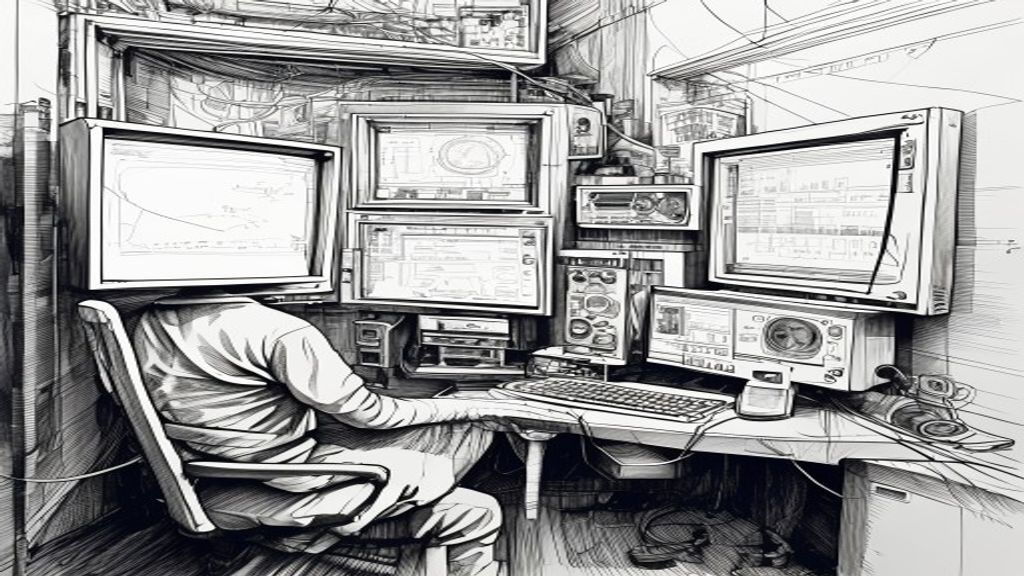
The surface-level assumption is that more data equals faster debugging. That if you just collect enough metrics, traces, and logs, the root cause will reveal itself like a da Vinci painting emerging from marble. It sounds good in sales pitches. It feels responsible in architecture reviews. But the trend data from 2025 tells a different story. According to industry surveys, the average engineering organization now ingests over 50 terabytes of observability data per month. Median spend on monitoring tools has climbed past $200,000 annually for mid-size teams. Yet mean time to resolution (MTTR) hasn’t budged in three years. In fact, it’s slightly worse. Teams are drowning in signals, starving for signal-to-noise ratio. They’ve built control rooms that look like NASA’s Mission Control, but they’re still guessing which wire is frayed. The dashboard delusion is this: quantity of data has no correlation with quality of insight. You don’t need a bigger firehose. You need a different drinking fountain.
The Silent Exodus
So what’s actually happening underneath the surface? While the industry was busy hyping “unified observability platforms,” a quiet exodus was underway. A small but growing cohort of senior engineers started doing something that terrified vendors: they turned alerts off. They stopped tuning dashboards. They deleted their Grafana instances. Instead, they built what insiders now call “causal debugging loops.” The approach is brutally simple. When something breaks, they ask a single question: What changed? Not what’s anomalous? They roll back the last deploy. They check recent config diffs. They query structured event logs, not firehose metrics. The market reaction has been telling. Several major observability startups—the ones that promised “full-stack AI-driven correlation”—have seen churn rates spike 40% in the last eighteen months. Some have pivoted hard into incident management. Others are quietly sunsetting their data lake features. Because the engineers paying the bills have figured out something the pitch decks never mentioned: you don’t need to see everything. You need to see the one thing that changed.
The Great Blind Spot
Why is everyone missing this? Because the industry has a serious blind spot. Observability is treated as a technical problem. You buy a tool. You install agents. You configure dashboards. You hire an SRE to write alert rules. But the actual problem is cognitive overhead. Every dashboard you add increases your mental load. Every metric you visualize becomes another thing your brain must ignore or evaluate. The human brain can hold about seven items in working memory. A production incident with fifteen dashboards is like being asked to solve a murder mystery while wearing VR goggles that show all fifty suspects at once. The blind spot is that we’ve optimized for data collection instead of decision speed. Engineers’ emotional reality is exhaustion. They’re tired of the false alarms. They’re tired of the 3 a.m. wild goose chases. They’re tired of feeling like their monitoring stack is gaslighting them. The industry keeps selling more data, but what engineers need is less noise. They need an answer, not a dashboard.
The New Orthodoxy
What does this mean going forward? The next wave of observability won’t be about collecting more. It will be about asking better questions. Forward-thinking teams are already shifting from “what’s happening?” to “what’s different?” They’re building pipelines that filter noisy metrics at ingestion. They’re embracing structured logging with causal correlation IDs. They’re running post-deploy validation that compares performance to a golden signal baseline—not a static threshold. The result? Teams that adopt this causal-first approach report shipping features 3x faster during incident periods. Not because they’re better engineers. Because they spend 70% less time diagnosing false positives. The practical implications for you: start auditing your observability bill this quarter. If you’re spending more on storing data than you are on runtime infrastructure, you’ve got the equation backwards. The new orthodoxy is brutal honesty about what you actually need to see to answer the only question that matters: what broke?
So Why Should You Care?
Because your team is burning out on noise, and you’re paying for the privilege. The industry’s observability playbook is a racket. You buy tools to see everything, then pay people to stare at it, then pay more tools to tell you what to ignore. The engineers who break this cycle ship faster, sleep better, and keep their sanity. You can too.
The Only Dashboard You Need
Delete one dashboard today. Just one. See what happens. Then delete another tomorrow. Keep going until you’re left with exactly three views that answer every critical question you actually face. You’ll know you’re done when your on-call rotations stop feeling like a punishment. When that happens, you’ll realize the truth: the best observability tool is the one you don’t have to look at. The next time your pager goes off at 3 a.m., ask yourself one question before you open the dashboard. What changed? The answer might be simpler than you think. It usually is.

Comments