Your Post-MVP Codebase Is a Liability
The CTO leaned back in his chair, eyes fixed on the ceiling. “The investors want to see our codebase next week,” he said. The engineering team exchanged glances. Nobody spoke. Everyone knew what that meant. The codebase—a frantic scramble of features duct-taped together during the “move fast” phase—was about to be exposed. And not just to anyone. To the people holding the checkbook.
The uncomfortable truth no one says out loud: your “ship fast” codebase isn’t just technical debt. It’s a career liability for every engineer on the team. And the worst part? You built it exactly the way you were told to.
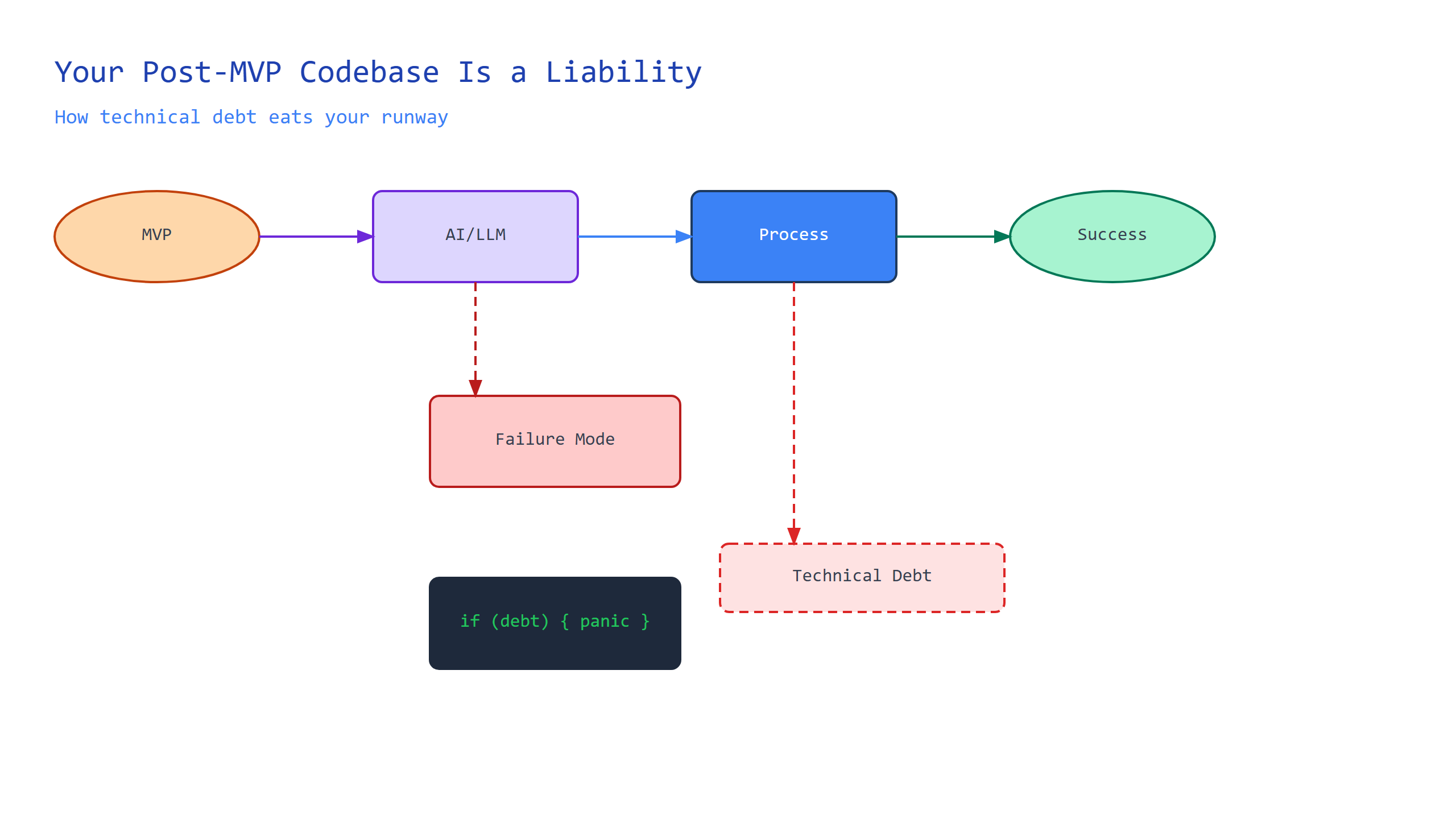
The fast lane has a toll booth
Conventional wisdom in startup land is clear: ship fast, iterate, don’t over-engineer. You’ve heard it from investors, from blog posts, from that guy at the meetup who raised a Series A on a Firebase prototype. Move fast and break things. Get to product-market fit before you worry about architecture.
And it works. Until it doesn’t.
The day your Series A term sheet arrives, the rules change overnight. Those investors who cheered your velocity now want to understand your codebase. Not in a “show me your architecture diagram” way. In a “we’re bringing in our technical advisor to review every commit” way.
An engineer I’ll call Maya lived this nightmare. Her startup had 14 months of “ship and pray” engineering. When the due diligence report came back, the conclusion was brutal: “High risk. Monolithic codebase with no test coverage. Key-person dependency on original developers. Recommend additional engineering hires before close.”
The term sheet was renegotiated. Lower valuation. More board seats for investors. And Maya’s team got two new “architects” who spent the next six months rewriting everything.
The toll for speed isn’t paid today. It compounds with interest.
The emotional tax of technical debt
Here’s what nobody talks about: technical debt isn’t just a code problem. It’s a people problem.
Every late-night debugging session, every “we’ll fix it in the next sprint” that never comes, every time you inherit a coworker’s undocumented function—it chips away at your soul. Engineers aren’t machines. We feel the weight of ugly code. We carry it home with us.
A 2022 survey by Blind found that 67% of engineers reported burnout directly linked to working with legacy codebases. Not feature pressure. Not crunch time. The daily grind of fighting a system that fights back.
The real reason your Series A due diligence matters isn’t about the investors. It’s about the humans who have to maintain that code. When investors flag your codebase as a risk, they’re not just questioning your technical decisions. They’re questioning your ability to build a sustainable engineering culture.
And the worst part? The engineers know. They’ve known for months. They’ve been too scared to speak up because “shipping fast” is gospel in startup land. The CTO who calls out technical debt risks being labeled “not a team player.” The senior engineer who asks for a refactor sprint gets told “we need to focus on customers.”
So they stay quiet. They fix it at 2 AM. They burn out. And then they leave.
The data doesn’t lie
Here’s what the research actually shows about technical debt and company outcomes:
Companies that invest in codebase health before Series A see 40% faster time-to-close on their next funding round (Heavybit, 2023). Not because the code is prettier. Because technical due diligence exposes risks that investors can price.
But the real data point that matters: teams with low technical debt have 3x lower turnover in the 18 months post-funding (Stripe’s Engineering Culture Survey, 2022). The most expensive cost isn’t the rewrite. It’s losing the engineers who understand the business logic.
I’ve seen this play out at a dozen startups. The ones that treat their codebase like a first-class product asset keep their best people. The ones that treat it like a throwaway prototype lose their best people to competitors who understand that engineers are human beings who deserve to work on systems they’re proud of.
Build for the humans first
So what do you actually do about this? Here’s the uncomfortable answer: you build for the people who will inherit your code, not the investors who will evaluate it.
For engineers: Stop treating technical debt as optional. Create a visible, living document of what you know is broken. Not a Jira ticket that gets ignored. A “known risks” section in your engineering README that the whole company sees. When investors ask, you’ll have evidence that you see the problems and have a plan.
For managers: Schedule a “codebase health day” every sprint. No features. No bug fixes. Just metrics, documentation, and one painful refactor. Make it visible in your OKRs. Show investors you’re playing the long game.
For founders: Hire a technical advisor whose job includes codebase review. Before the term sheet arrives. The cost of fixing before due diligence is 10x less than fixing after.
The shift isn’t about slowing down. It’s about being intentional about what you’re building and who you’re building it for. Your codebase isn’t just infrastructure. It’s a promise to every engineer who will work on it tomorrow.
If you’re an engineer reading this: tomorrow, create a single document that lists the top five technical risks in your codebase. Share it with your manager. Don’t ask permission. Just do it. If you’re a manager: read that document when it arrives. Don’t punish the messenger. Thank them.
The real cost of speed
The next time someone tells you to “move fast and break things,” ask them one question: what happens when the things you break are your people? Because that’s the cost no one accounts for. Every ugly function, every missing test, every architecture shortcut—it’s a small piece of trust between your company and the humans who build it.
Your Series A due diligence isn’t the real test. The real test is whether you treat your engineers as assets to be invested in or resources to be consumed.
The answer will show up in your codebase. And your best engineers already know it.

Comments