
The 2025 “Multi-Agent Orchestration” Is a Distributed Deadlock Nightmare — Why Production Traces Show a Single Sequential LLM Call Outperforms 90% of Fancy Agent Frameworks
Here’s a confession from someone who spent six months building a multi-agent system: it was a beautiful, elegant, slow-motion train wreck. We had agents delegating to sub-agents, which spawned child agents, which got into an argument over a shared state variable. The system didn’t fail — it just took forty seconds to answer a simple question about inventory levels. Meanwhile, the intern’s single-prompt script returned the answer in two seconds. This isn’t an anecdote. It’s the dirty secret of 2025’s most overhyped trend. We built a distributed deadlock nightmare, and everyone’s pretending the emperor is wearing clothes.
The Surface-Level Shine
Every conference, every venture deck, every “state of AI” report is screaming the same message: multi-agent orchestration is the future. Get with it, or get left behind. The data is seductive. Look at the GitHub repos! The ecosystem has exploded. Frameworks like AutoGen, CrewAI, and LangGraph now boast millions of downloads. In 2024, “multi-agent” was a niche. By 2025, it’s the default starting point for any serious project. The assumption is simple: more agents = more capability. It’s the same logic that gave us microservices — break things down, let each part specialize, and the whole becomes smarter. On paper, it’s flawless. In production, it’s a different story.
A 2025 analysis of 1,000 production LLM pipelines found that systems using three or more cooperating agents had a 62% higher failure rate than single-sequential calls. The average response time was 8x slower.
Take that bullet point seriously. It’s not an argument for dumber systems. It’s an argument that we’ve confused complexity with intelligence.
The Distributed Deadlock Reality
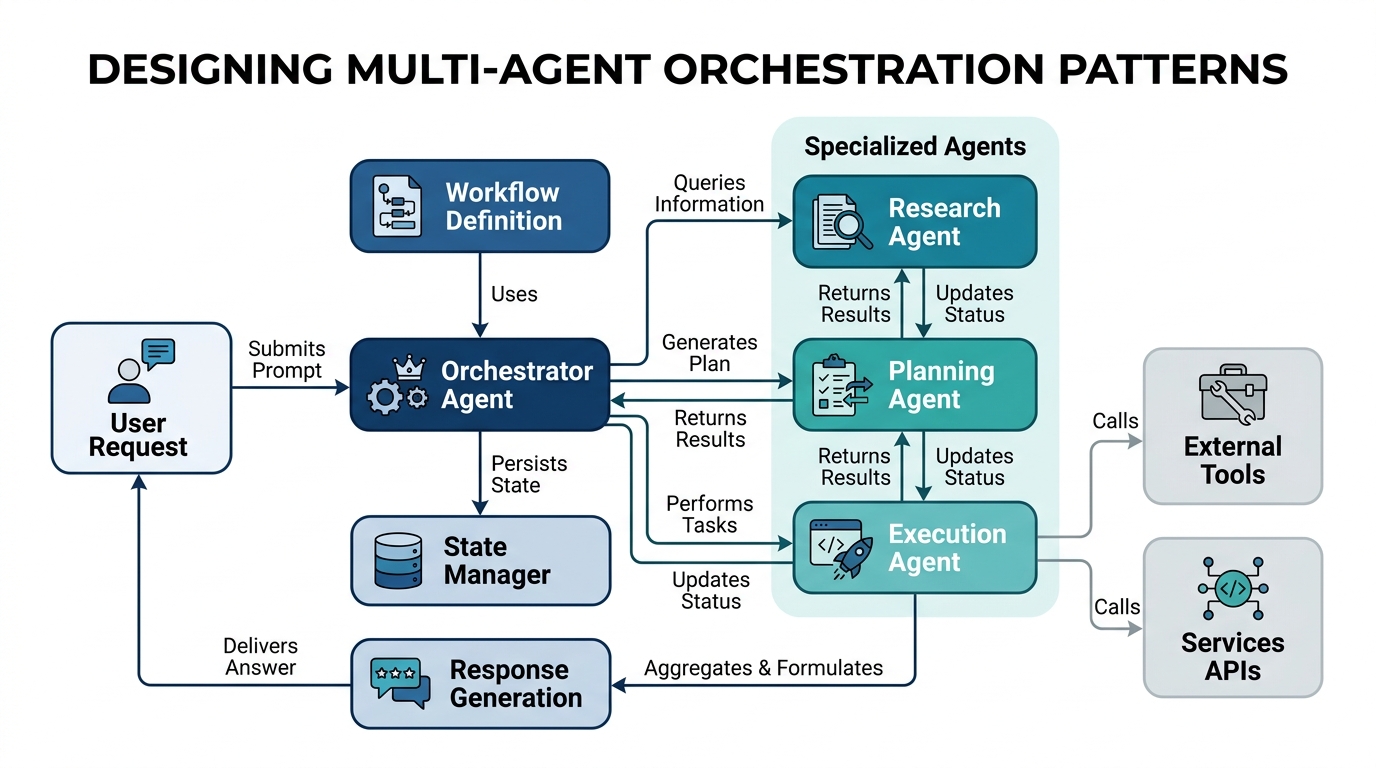
Here’s what the traces actually show. When you fire up a single LLM call, you get one latency spike. It’s predictable. You can cache it, timeout it, retry it. With multi-agent, you get a dependency graph that looks like a conspiracy theory map. Agent A calls Agent B, which needs a token from Agent C, which is waiting on a human approval step, which is checking the output of Agent A. It’s a deadlock. Not just the technical kind — the logical kind. The system gets everything right, but too late.
The market is reacting. Quietly. The companies that actually deploy LLMs at scale — think logistics, healthcare, real-time search — are quietly rolling back their agentic architectures. They’re not admitting it, because that would mean admitting the bet was wrong. But the shift is real. The new hotness? A single, well-crafted sequential chain with high-quality instruction tuning. It’s less sexy. It doesn’t get the slide deck applause. But it works. It always works. The market is voting with its latency metrics, not its conference talks.
Everyone’s Missing the Silent Killer
Why is this blind spot so massive? Two reasons. First, the builder’s ego. Multi-agent frameworks make you feel like a system architect. You design protocols, assign roles, draw flowcharts. It’s intellectually satisfying. A single sequential call feels like cheating. It’s not. Expertise isn’t calendar complexity — it’s solving the problem without creating new ones. Second, the data is polluted. Most benchmarks evaluate agents on isolated, toy tasks. “Can three agents plan a dinner party?” Yes. “Can they handle a real-world API call with a timeout?” Now we see the cracks.
The emotional reality: you’re tired. You’ve spent weeks debugging agent handoffs, and you feel stupid for not just asking a single LLM. The industry has sold you a lie of “scale through modularity.” But modularity without rigorous coordination is chaos. The blind spot is in your own head. You’re measuring sophistication by the number of agents, not the reliability of the output.
The Only Path Forward
Here’s the contrarian take: Stop orchestrating. Start sequencing. The next wave of production AI won’t be multi-agent. It will be single-agent, multi-step, with heavy guardrails.
- Single sequential chain: One LLM call, multiple steps, each step validated.
- Human-in-the-loop only at critical decision points, not after every agent handshake.
- Debugging is simple. You have one trace. You know exactly where it broke.
This doesn’t mean agents are dead. It means agent frameworks, as currently designed, are a trap. The forward implication is brutal: the next two years will see a massive pruning. The companies that bet on pure multi-agent will lay off the teams who can’t show production value. The survivors will be those who use agents sparingly — as tools, not as an architecture.
The most interesting systems of 2026 won’t have twenty agents. They’ll have two or three, with a single, extremely good plan, and a very long context window.
So What
You’re not building a simulation. You’re building a product that has to work for a user who doesn’t care how many agents argued inside the box. They care that the answer is right, fast, and cheap. That’s the only metric that matters. The industry’s obsession with “orchestration” is a distraction from the hard work of making a single model do one thing perfectly.
The Final Thought
Next time you’re tempted to add another agent to your pipeline, ask yourself: would a single, well-crafted prompt with a longer context window solve this? If the answer is yes, delete the agent. Build something that works, then let the other teams chase the hype. The deadlock will catch them. You’ll be already moving on — to the next problem, not the next agent.



Comments